Loading…
How to upcycle a thrift store dresser
Check if a thrift dresser is worth it, what supplies to buy, and the exact steps to clean, repair, paint and re-hardware it on a budget.
Have a piece in front of you? Snap it and get a plan, cost and preview for it.
Try ThriftFlip free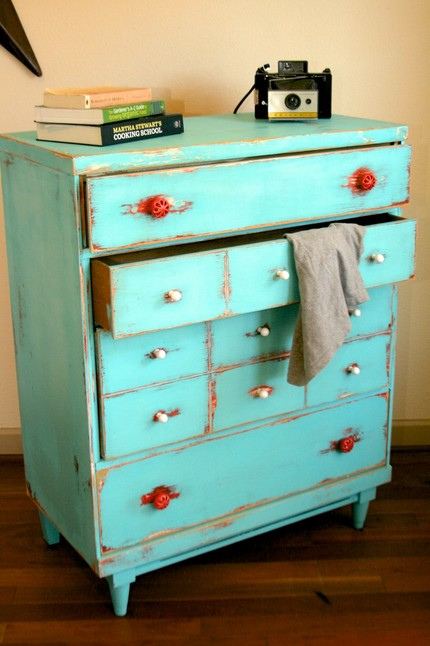
Chipped thrift dresser in Cottagecore: Sage Meadow Cottage, a ThriftFlip plan for this photo. Try it on your piece
A $30–$60 thrift-store dresser is the classic first flip: big impact, forgiving surfaces and a resale market if you change your mind. Here is how to go from "brown and tired" to "where did you buy that?" without a workshop.
1. Check it before you buy
- Drawers: pull every one out. Dovetail joints and wooden runners usually mean solid construction; stapled particleboard drawer bottoms that sag are a warning.
- Material: look at the back and the underside of the top. Solid wood or plywood can be sanded and stained; particleboard with a printed "wood" film can only be painted, and only after a bonding primer.
- Smell and pests: musty smells fade, smoke smell needs shellac primer, and any tiny holes with fresh sawdust mean walk away.
- Old paint: on pieces from before 1978, test painted surfaces with a lead test swab before sanding.
2. Supplies for a typical dresser (about $60–$110)
- Degreaser or a sugar-soap solution, rags, a bucket
- Wood filler and a putty knife
- 120 and 220 grit sanding sponges (an orbital sander is a bonus, not a must)
- Bonding primer (shellac-based if there are stains or odours)
- About a quart of cabinet or furniture paint, or chalk paint plus a water-based topcoat
- A 2" angled brush and a 4" foam roller
- New knobs or pulls, plus a drill bit and filler if the hole spacing changes
3. The steps
- Empty, label and strip hardware. Number drawers with tape so they go back where they came from.
- Degrease everything. Decades of hand oil stop paint sticking. Rinse with clean water and let it dry.
- Repair. Glue loose joints, fill dings and old hardware holes, and sand the filler flush once it has cured.
- Scuff-sand. You are not stripping, just dulling the shine with 120 grit so primer can grip. Vacuum and wipe the dust.
- Prime. One thin coat. Sand lightly with 220 when dry.
- Paint in thin coats. Roll flat areas, brush the details, and tip off with long strokes. Two or three coats beat one thick one.
- Protect and cure. Add a topcoat on the top surface at least. Paint feels dry in hours but cures over 1–3 weeks, so go easy on it.
- Hardware and drawer glide. Fit the new pulls and rub a candle or paraffin on wooden runners so drawers slide smoothly.
Is it worth it?
If the dresser is solid and the drawers work, almost always. If it is particleboard with swollen corners, the paint will look good for a while but water damage tends to come back, so pay accordingly. Not sure about your piece? Snap it and ThriftFlip will give you an honest verdict, a supply list with costs and a style-matched plan.
Get a plan for your exact piece
Upload a photo, pick boho, modern, cottagecore or Japandi, and get a worth-it verdict, supplies with costs and numbered steps. 2 free plans a month.
Flip my find